03/10/26
When standard solutions reach their limits with nonwovens
Anyone processing nonwovens knows the challenges involved. The material is lightweight, bulky, and often so sensitive that it can only withstand limited pressure and tension. That is exactly what makes the winding process so demanding. What works reliably with more robust web materials can result in quality losses, unstable roll build, or even material damage when applied to nonwovens. That is why we developed a custom solution for a customer in the nonwovens sector, designed specifically around these material related requirements.
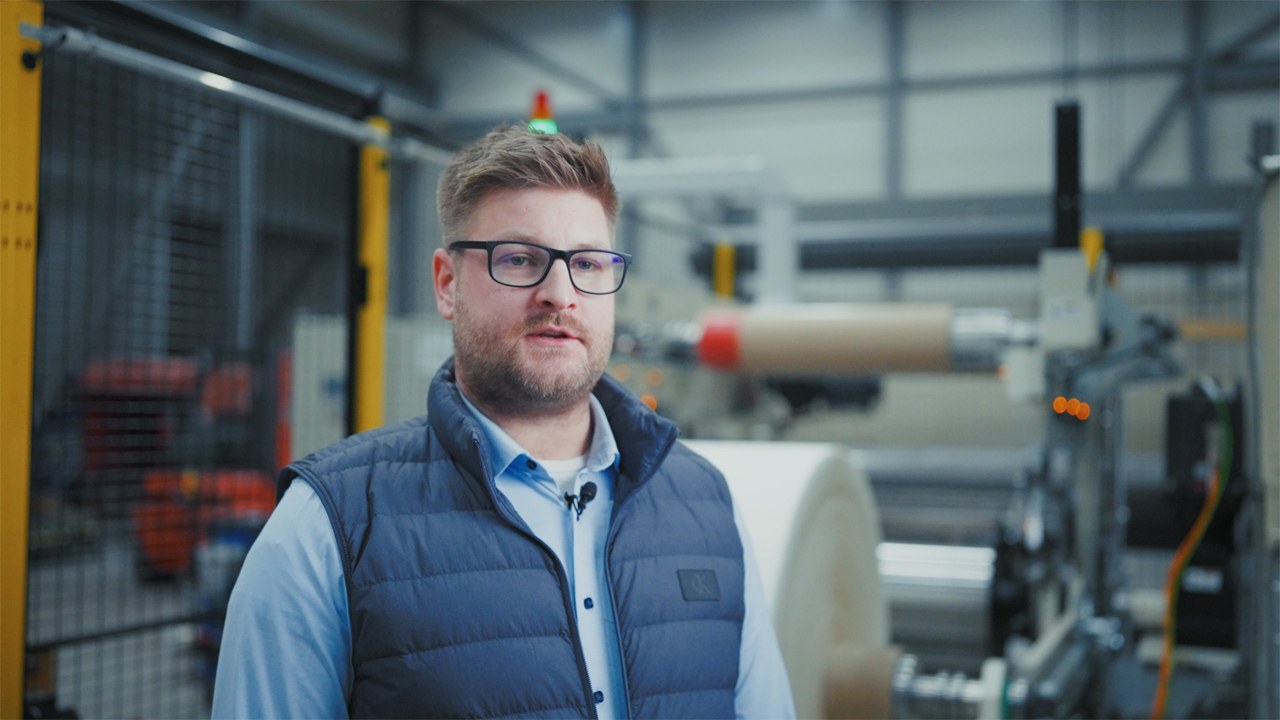 The starting point of the project was the need to wind a highly sensitive material reliably while handling it as gently as possible. Together with the customer, we approached the application as a dedicated engineering task from the outset. The design, machine concept, and process layout were closely coordinated. Martin Klemme from our design team developed the machine in such a way that it not only takes the material specific characteristics into account, but makes them controllable in a targeted and practical way.
The technical solution: a surface winder for sensitive materials
At the heart of the system is a specially developed surface winder for nonwovens. This contact based winding concept is particularly well suited to tension sensitive and compressible nonwovens because the torque does not have to be transmitted through the entire roll structure. Instead, it can be introduced in a controlled manner via the outer layer. In other words, the roll is driven via its circumference, while the roll build is largely determined by the interaction between contact force and web tension.These parameters are critical when processing sensitive nonwovens. High porosity, compressibility, and low tensile strength mean that winding defects can develop during the process itself. Typical risks include trapped air, wrinkling, unstable roll hardness, or telescoping. Such defects can only be controlled reliably if the machine, web handling, and control system are consistently tailored to the specific product.
Air assisted threading and automatic roll change for stable winding results
The material is threaded automatically via air tables. A precisely directed airflow guides the web fully automatically to the contact roll. This replaces manual intervention, protects sensitive materials, and ensures a reproducible start to the process. To minimize downtime, the system uses a four position magazine for prepared winding shafts, which are automatically transferred into the cutting position. This significantly improves both process control and machine availability.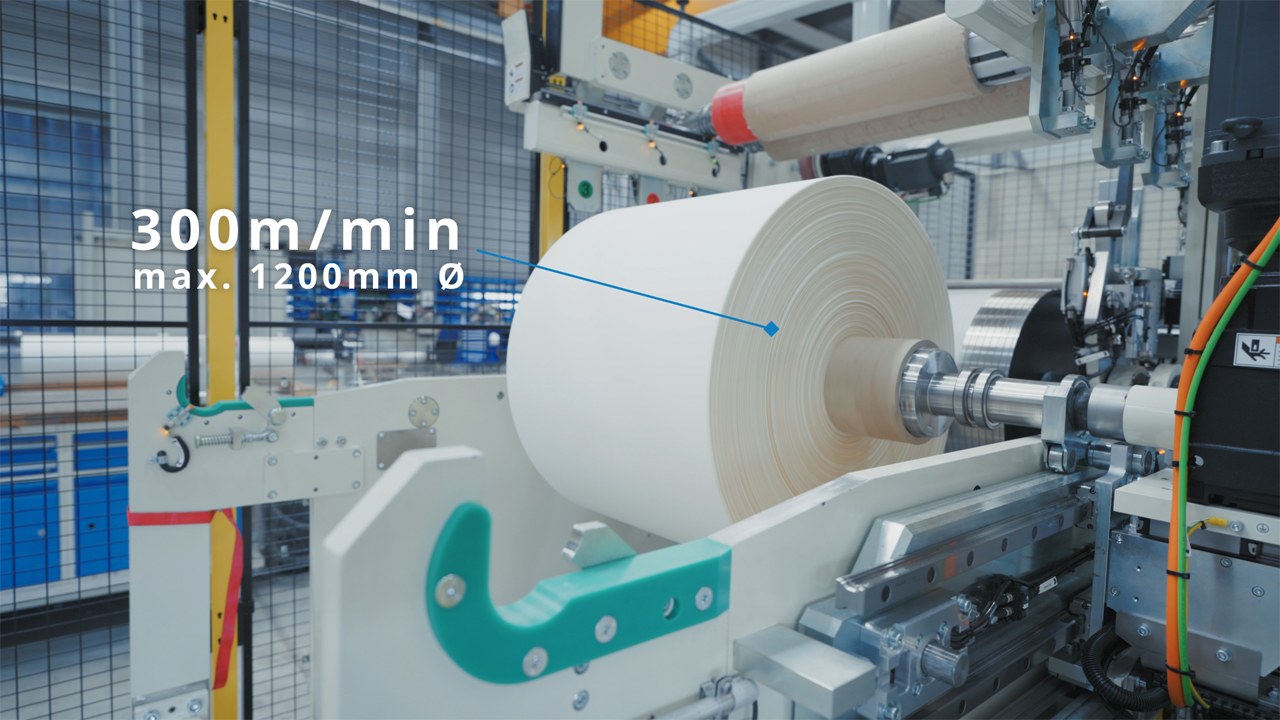 The separating process is also designed to suit the material. Instead of using mechanical knives, the material is torn in a controlled manner in order to avoid placing additional stress on sensitive fibres. A special shaft support system also enables winding with minimal contact pressure so that the loft, meaning the volume of the nonwoven, is preserved. Winding quality is achieved through the precise interaction of nip force, web tension, and active support elements that stabilize the roll build even during critical phases.
In addition, an integrated air management system combined with an adapted contact geometry helps prevent air entrapment at high operating speeds. This consistent alignment of every machine function with the actual behaviour of the material is the key to stable layer formation and the prevention of downstream defects.
A holistic project approach for future ready production
Our understanding of custom machine building goes far beyond design and assembly. We support projects all the way through to real production operation. This includes mechanical and electrical installation, dry runs, commissioning with original material, and direct operator training. Our quality standards are only met once the system is running reliably in day to day production, supported by ongoing remote assistance.This close connection to the actual process is particularly important in demanding nonwoven applications. Winding technology is only successful when the machine concept, material behaviour, and operator practice work in perfect harmony. That is why commissioning and training are integral parts of our solution for reliable and reproducible results.
This video will be loaded from Google YouTube.
Their privacy policy applies.
Their privacy policy applies.
Modern requirements such as automated roll changes, stable control parameters, and a digital machine architecture also ensure high machine availability and low scrap rates. Our objective is clearly defined: maximum process stability and reliable control of sensitive materials in a digital production environment.
A solution that brings sensitive materials under reliable process control
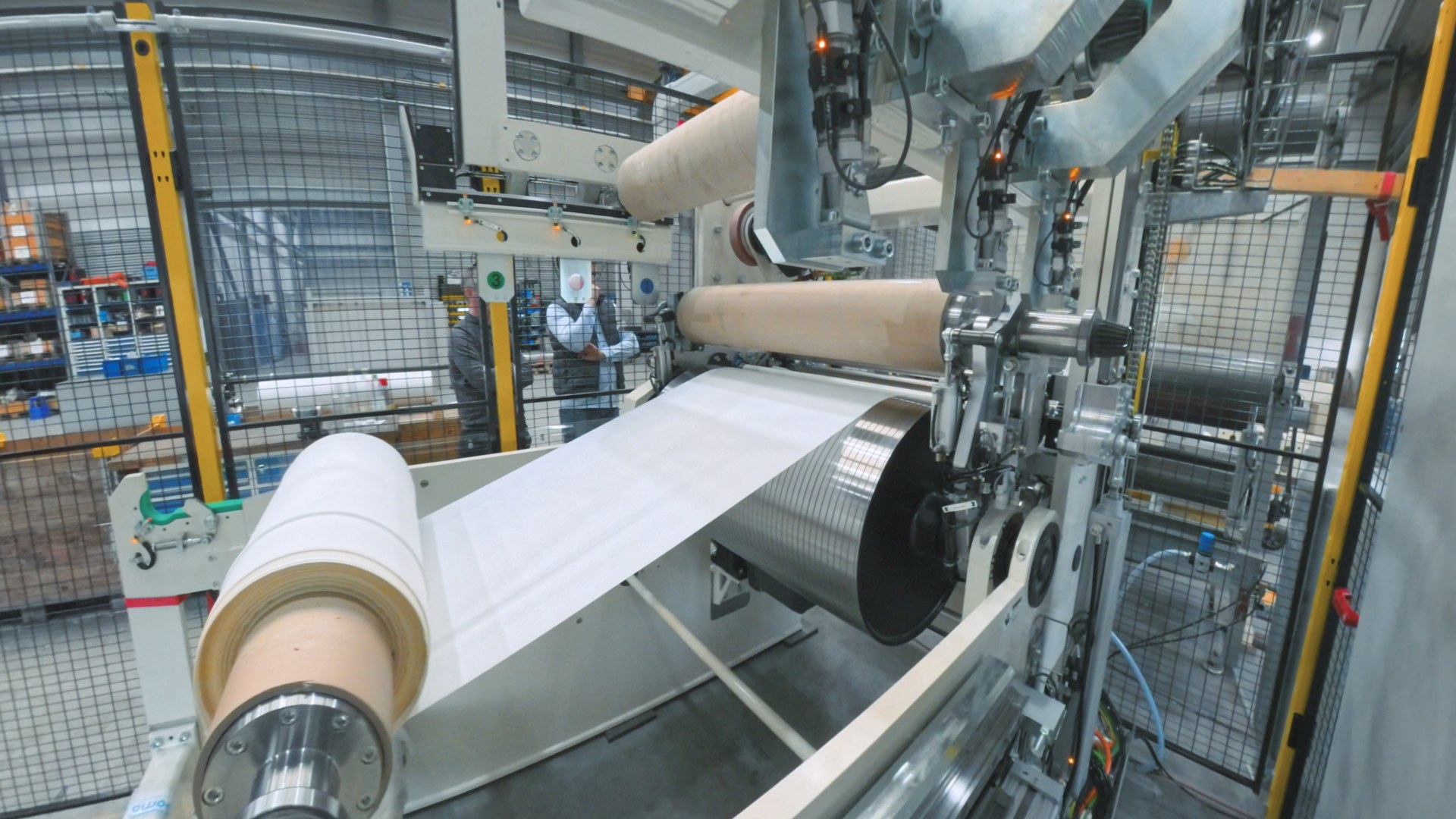 Our custom solution for the nonwovens sector is therefore much more than a single machine. It is the result of a joint development process with the customer, precise material oriented engineering, and a clear understanding of what matters in real production environments. Automatic threading, controlled roll changes, material gentle roll build, and intensive support during commissioning and operation all work together seamlessly. That is where the real added value lies: a winding solution that not only processes highly sensitive materials, but keeps them reliably under control throughout the process.
When nonwovens need to be wound, standard solutions are often not enough. What matters is how precisely a machine can be adapted to the physical properties of the material. With this individually developed surface winder solution, we show how even highly sensitive nonwovens can be processed automatically, gently, and with consistently stable quality. For our customers, this means greater process reliability, fewer manual interventions, and a solution that proves itself not just in theory, but in real production.
Contact us to find your individual solution.